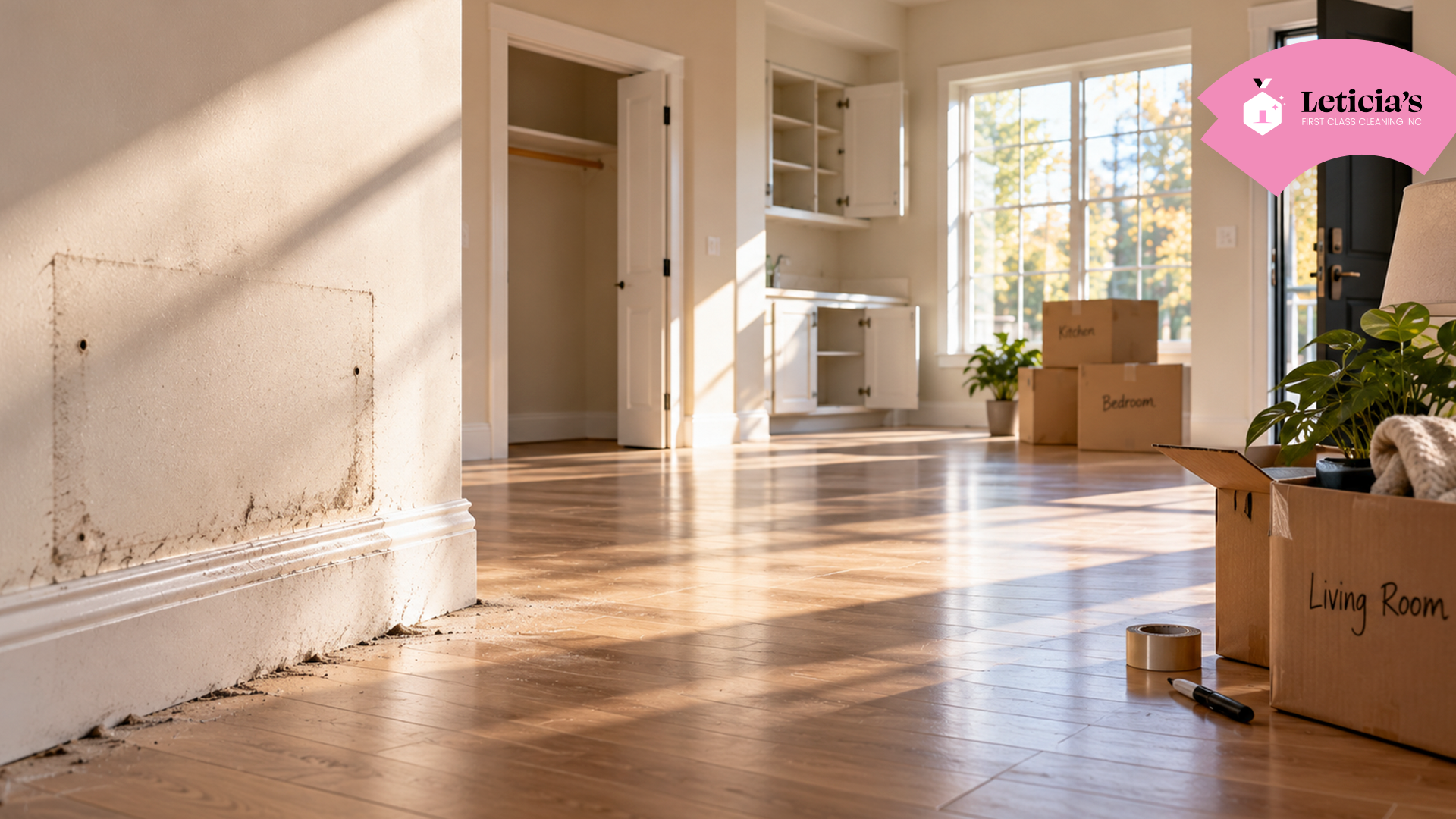
The key turns, the door opens, and the first thing you notice is the sound. Your footsteps echo across the living room in a way they never will again. Afternoon light falls across bare floors. There are no boxes yet, no couch, no rug, no pictures on the walls. Just the space itself, waiting.
It’s a strange and beautiful moment. The house is officially yours, and yet it doesn’t feel like yours at all. Not yet.
And then you notice the details. A faint rectangle on the floor where someone’s dresser used to stand. A line of dust along a baseboard that no one could reach for years. A cabinet shelf with a ring from a jar that isn’t there anymore. The house is telling you its story, and quietly asking you to decide how the next chapter begins.
The Window Between the Keys and the Boxes
Every move has a small window that’s easy to miss. You have access to the space, but your life hasn’t moved into it yet. Once the truck arrives, that window closes quickly. Furniture fills the rooms, boxes stack in the corners, and the places that were so easy to reach this morning disappear behind your own belongings, sometimes for years.
That’s why this moment matters so much. An empty home is the most accessible it will ever be. Every shelf, closet, drawer, and corner is open, visible, and ready to be cared for properly.
Moving Doesn’t Just Empty a Home. It Reveals It.
Furniture hides more than we realize. A sofa can shelter a long stretch of baseboard for as long as it stays in place. A bed covers the floor beneath it and the wall behind the headboard. A refrigerator sits in front of a space most people never see. Bookshelves, dressers, and entertainment centers all protect their own small collection of dust, scuffs, and forgotten crumbs.
When everything is gone, the whole home becomes visible at once. That can feel a little overwhelming at first. But it’s also a rare gift: the chance to start from a truly clean foundation instead of cleaning around what’s already there.
Moving In: Starting With a Clean Slate
When you’re moving in, the goal is simple. Before your life arrives, the space should be ready to receive it.
That begins with the places your belongings will live closest to. Kitchen cabinets and drawers will soon hold your plates, glasses, and utensils. Bathroom cabinets will hold your towels and toiletries. Closet shelves and floors will hold your clothes and shoes. Each of these deserves a thorough cleaning before anything is placed inside.
It’s also worth remembering how many hands have passed through the home recently. Between showings, inspections, repairs, and a final walkthrough, a house sees a lot of visitors before the new owners ever spend a night there. The CDC’s guidance on cleaning your home recommends cleaning high-touch surfaces such as light switches, doorknobs, and countertops regularly and after you’ve had visitors, using a product suited to each surface and following the label instructions.
An empty home is also the best time to look closely. With cabinets cleared out, you can see beneath sinks, around the base of toilets, and along window frames. If you notice signs of moisture or water staining, it’s worth addressing before you settle in. The EPA’s Brief Guide to Mold, Moisture, and Your Home notes that the key to mold control is moisture control, and that water-damaged areas should be dried within 24 to 48 hours to help prevent mold growth.
Moving Out: Leaving Well
A move-out has a different rhythm, but it holds its own kind of meaning. It’s the last time you’ll walk through rooms that held birthdays, ordinary Tuesdays, late-night conversations, and everything in between.
Practically speaking, a move-out cleaning prepares the home for whoever comes next, and for the final walkthrough that often comes before handing over the keys. It’s the moment to reach the places that daily life never asked about: the inside of the oven, the refrigerator shelves and drawers, the floor where the washer and dryer stood, the tops of door frames, and every baseboard that finally sees daylight again.
There is something quietly satisfying about leaving a place better than it looked when the boxes came down. It closes one chapter with care, and it lets you carry only the memories, not the dust.
Why Timing Makes All the Difference
The Clean Slate Effect depends on when the cleaning happens. A few timing principles can make a noticeable difference:
After the last box leaves, before the first box arrives. Whether you’re moving in or out, the ideal moment is when the space is completely empty.
After repairs and painting, not before. If contractors, painters, or handymen are scheduled, plan the cleaning after their work is done so the finished space stays fresh.
Before the final walkthrough. For a move-out, give yourself enough breathing room to clean after the furniture is gone and before the keys are returned.
With a buffer day if possible. Moves rarely go exactly as planned. A little extra time keeps the cleaning from being squeezed between the truck and the deadline.
The Feeling of a Space That’s Truly Yours
There’s a difference between moving into a house and moving into a home that feels new. The first is a change of address. The second is a fresh start.
When the cabinets are clean before your dishes go in, when the closets are fresh before your clothes are hung, and when the floors are spotless before the first rug is unrolled, something shifts. The space stops feeling like someone else’s past and starts feeling like your future.
Let Us Handle the Reset
Moving is already full of lists, deadlines, and decisions. Leticia’s First Class Cleaning helps make that small window between the keys and the boxes count. Our Move-In/Move-Out Cleaning brings careful, detailed attention to the places a busy moving week tends to leave behind. You focus on the move. We’ll help make sure the space is ready for it.
Whether you’re opening a new door or closing an old one, request an estimate and explore Leticia’s First Class Cleaning Move-In/Move-Out Cleaning services.